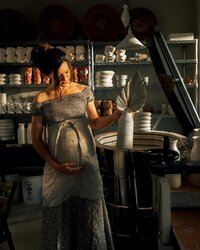
for a while, my husband kept building me more shelves.
the laundry room had become a place things went to disappear — bottles half full, baskets of stuff with no home, a shelf for things i’d bought because they promised to solve a problem i didn’t know i had. every time it overflowed, he’d build another shelf. more shelving, more bins, more places to put it all. he was trying to help. i let him, because it felt like the answer — more room meant more order, didn’t it.
it took longer than i’d like to admit to realize the shelves weren’t the problem. i was.
somewhere along the way, having things became a substitute for choosing them. the algorithm doesn’t reward restraint — it rewards the next thing, and the next, each one dressed up as essential. and for a while, i went along with it. it’s easy to. the recommendation feels personal. the price feels reasonable. the packaging feels like a small gift to yourself.
but a room full of shelves for things you don’t reach for isn’t order. it’s just noise, organized.
slow living asked me to pay attention to my days — to stop rushing through them for the sake of getting to the next thing. the deinfluence is the same instinct, turned toward what comes into the house. it’s not about owning less for its own sake. it’s about asking a thing to earn its place before it earns your money.
so what does choosing better actually look like, in practice? a few questions i’ve started asking, standing in a store or scrolling a feed:
will i still want this in a year, or just today was this made by someone, or manufactured for everyone do i already own something that does this am i buying the object, or the feeling of buying something new
most things fail at least one of these. that’s fine. that’s the point.
the things that pass tend to share a quality — they were made slowly, by someone who cared whether they lasted. a dish that gets used at every meal because it’s the right weight in your hand. a cup you reach for before your coffee’s even finished brewing, not because it’s precious, but because it’s yours in a way the shelved-away things never were. that’s not a marketing line. it’s just what happens when something is made with attention instead of speed.
i think about this a lot at the wheel. every piece i make takes time i can’t get back — there’s no version of pottery that rewards rushing. the clay tells you when you’re moving too fast. and i’ve come to think that’s not a limitation of the craft. it’s the whole lesson of it, offered to anyone paying attention.
the ordinary things in a home — the mug, the plate, the bowl you eat from every single day — don’t need to be exceptional to be worthy of care. they just need to be chosen, not just acquired.
the shelves are still there. my husband built them well, and i’m not about to tear them out. but we stopped adding to them. these days the laundry room holds what we actually use, with room to spare — and that empty space has come to feel like the real accomplishment. not the shelves. the space.
if this way of thinking about your home and your days resonates, it’s the same thread running through the unhurried mom community — a place for slowing down on purpose, not just talking about it.
How it started >
I make pottery to elevate the daily rituals; the first cup of coffee, gathering around a table, second cup of coffee, and shepherding children.
welcome